


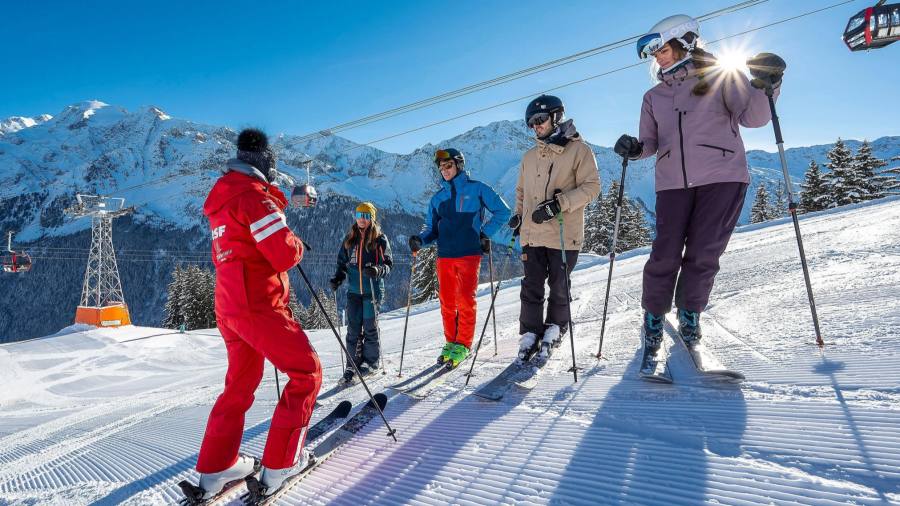
The number of British citizens working in the EU travel industry in frontline roles such as travel reps, ski guides or chalet hosts has fallen by more than two-thirds since Brexit, new research has shown.
The cost of obtaining visas, work permits and other paperwork after Brexit was blamed for a sharp reduction in opportunities that particularly hit young Britons hoping to work as “seasonaires” in Europe, the survey of 100 industry executives found.
Mark Tanzer, chief executive of trade body Abta, which co-authored the research, urged the government to work with the EU to improve visa and youth mobility arrangements which were restricted after the UK left the EU in 2021.
“With the UK outbound travel industry contributing £49bn a year to the UK economy, and a major driver of growth, not putting in the right mobility arrangements with the EU could come at a cost to UK plc,” he said.
Under the EU-UK trade deal, Britons can travel to the EU for 90 days in any 180-day period, but need permits and visas for seasonal travel jobs. Before Brexit, these roles were open to Britons who could work in the EU on contracts issued by UK-based companies.
Charles Owen, managing director of Seasonal Businesses in Travel (SBiT), which co-commissioned the report, said the findings had borne out the industry’s worst predictions about the impact of Brexit.
The industry is urging the government to agree to a Youth Mobility Scheme with the EU, similar to that which the UK has with countries such as Australia, Canada and New Zealand that allows 18 to 30-year-olds to live and work in the UK for up to two years.
“It is in both the UK and EU’s interest to provide a policy framework that enables travel and tourism between the UK and EU to thrive — given the €40bn contribution UK tourism makes to the EU each year,” Owen added.
The survey found that UK travel workers in the EU declined by nearly two-thirds, from 11,970 in 2017 — the last full year not impacted by the 2016 Brexit vote — to 3,700 in 2023, with 18 to 24-year-olds showing the sharpest fall.
With the cost of obtaining permits for a UK worker in France averaging £880, the number of catered holidays being offered in France by UK holiday companies has more than halved since 2017. The number employed in the French Alps over winter fell by more than 70 per cent.
In some countries, such as Austria, it had proved impossible to employ UK workers because of the visa quota system, added Sarah Searson, managing director of Skiworld, an independent UK ski tour operator.
“[That] means we can only employ EU passport holders there, of which there is not a certain or ready supply. As a result, we have had to relinquish over two-thirds of our exclusive chalet beds,” she said in the report.
Other travel bosses warned that dwindling opportunities for young Britons to work in the EU would have long-term consequences for the industry, with 75 per cent of businesses predicting Brexit will hit their business harder than Covid-19.
Giles Hawke, chief executive of Cosmos, an independent UK tour operator, told researchers that his career had begun with nine years working in France, Austria and Switzerland where he gained experience of the trade.
“Without this access to the frontline learning and the range of skills this offers, there is a real risk that travel leaders of the future will struggle to have the rounded experience and breadth of skills and knowledge needed,” he said.
The Foreign Office did not immediately return a request for comment.

