


MF3d
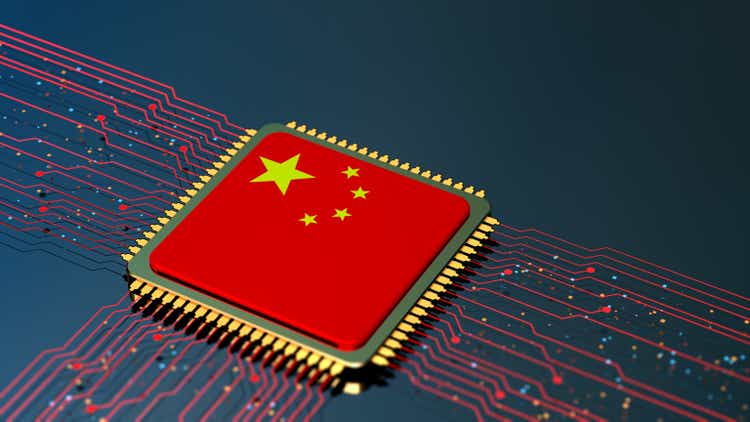
China intends to step up efforts to build its computing power by more than a third in less than three years, aimed at benefiting local suppliers and strenthen technology self-reliance as U.S. restrictions pressure the country’ industry.
The plan, released by ministries including the Ministry of Industry and Information Technology, shows that China aims to have its total computing power reach 300 EFLOPS by 2025.
Exaflop (EFLOPS) is a measure of performance for a supercomputer which can calculate at least one quintillion floating point operations per second.
Currently, China’s total computing power has reached 197 EFLOPS, this places it second after the U.S., the ministry had said earlier.
China has targeted 220 of computing capacity across its tech sector this year, as per a Bloomberg report.
China also aims to the push to hone its storage capabilities in areas such as storage technology, storage industry and storage network collaboration, according to the plan which was unveiled on Monday.
Last week, it was reported that the U.S. is giving China an additional warning that it will update its rules on export controls for semiconductors and semiconductor equipment, perhaps as soon as next month. In September, China’s international trade council formally requested the U.S. to “carefully consider” the regulations. The U.S. had issued final rules aimed at restricting expansion in China by semiconductor companies which would receive federal funds.
The U.S. President Joe Biden had signed an executive order in August to regulate certain U.S. investments in China in three areas — semiconductors and microelectronics, quantum information technologies, and artificial intelligence, or AI.
The world’s second largest economy is now pushing for adopting home-made IT products. In August, Chinese semiconductor industry executives urged for building up the domestic supply chain amid U.S. curbs.
The U.S. had blacklisted Huawei Technologies and Semiconductor Manufacturing International (OTCQX:SIUIF) but the companies are among the most active in advancing local technology.
At the end of August, Huawei surprised many by quietly launching its new flagship phone, Mate 60 Pro. The company did not provide details on the chip inside but people speculated that it could be using a 5G capable chip. The chip, reportedly, is made by SIUIF and ignited concerns in the U.S. and raised questions about how it was possible, without the company being able to access critical technologies.
Huawei’s unit HiSilicon, reportedly, is also shipping new Chinese-made chips for surveillance cameras, showing signs that the company is finding ways around U.S. export restrictions imposed in 2019.

